
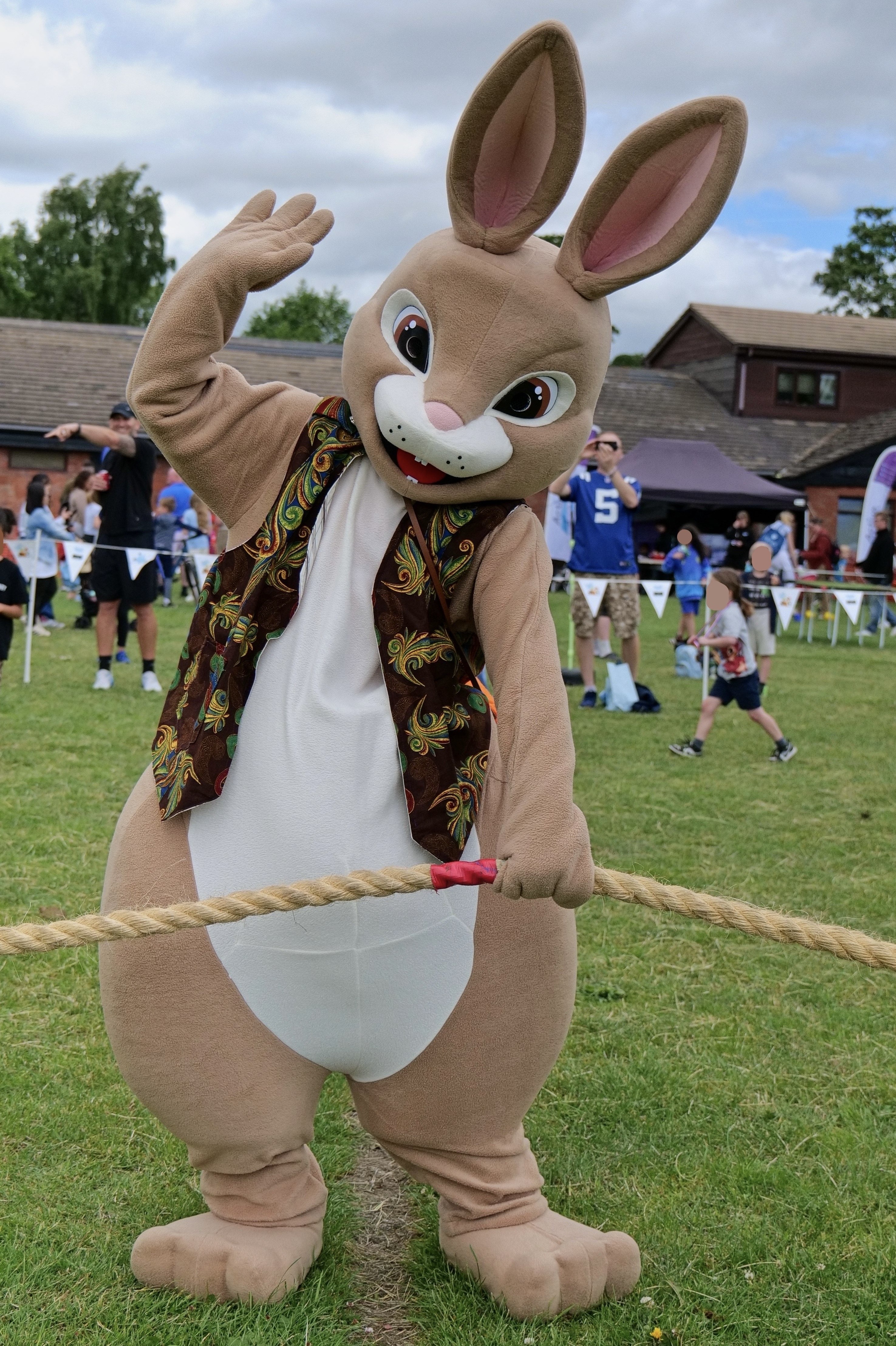
Every school mascot program eventually faces the same problem.
Your performer graduates.
Maybe they spent two or three years developing the character. They know exactly how the mascot walks, celebrates, interacts with children, works the student section, and gets a crowd excited.
Then May comes.
They graduate—and suddenly the school needs someone new inside the suit.
For many schools, that means starting over.
It doesn’t have to.
A strong mascot program should be able to survive changes in performers while keeping the character, traditions, and standards students have come to recognize.
Here’s how schools can prepare for a successful mascot transition.
1. Remember: The Performer Graduates, the Character Doesn’t
One of the most important principles of a school mascot program is separating the performer from the character.
Students should feel ownership and pride in their role, but ultimately, they are temporarily responsible for portraying a character that may have existed for decades.
Your mascot should have recognizable characteristics that continue from performer to performer.
Think about questions like:
Is your mascot goofy or intimidating?
Energetic or laid-back?
Mischievous or wholesome?
How does the mascot celebrate?
How does the mascot interact with children?
Are there signature poses, dances, gestures, or traditions?
Write these things down.
Future performers shouldn’t have to guess who the character is.
2. Don’t Wait Until Graduation to Find the Replacement
If possible, begin identifying future mascot performers before your current performer leaves.
That creates something incredibly valuable:
Overlap.
Instead of having a brand-new student learn everything alone, they can shadow an experienced performer.
Let them attend practices together.
Have the new performer observe game-day preparation.
Teach them how the costume is stored and maintained.
Practice common interactions.
Let the experienced mascot explain what they’ve learned through trial and error.
A few weeks of overlap can preserve years of institutional knowledge.
3. Hold Actual Mascot Tryouts
Being enthusiastic doesn’t automatically make someone a great mascot.
Schools should consider creating a simple tryout process to evaluate potential performers.
Look for students who demonstrate:
- Strong nonverbal communication
- Energy and enthusiasm
- Creativity
- Coachability
- Physical awareness
- Reliability
- Improvisation skills
- School spirit
- Appropriate judgment around crowds and children
You aren’t necessarily looking for the best dancer or athlete.
You’re looking for someone capable of bringing a character to life.
Get My Mascot provides a Mascot Team Tryout Template that programs can use as a starting point when building their own selection process.
4. Create a Mascot Handoff
Before your outgoing performer leaves, have them document what the next mascot needs to know.
This might include:
Character personality: How should the mascot behave?
Traditions: What happens at certain games, assemblies, or events?
Signature material: Which dances, poses, skits, or routines work best?
Crowd interaction: What gets the student section engaged?
Costume knowledge: How is everything worn, cleaned, transported, and stored?
Game-day routine: When does the performer arrive? Where do they change? Who is their handler?
Lessons learned: What does the outgoing performer wish someone had told them on day one?
Get My Mascot’s training resources include an Annual Mascot Handoff specifically to help programs organize this transition.
5. Train the New Performer
Passing along traditions is important.
But the incoming performer still needs proper mascot training.
New performers should understand character development, exaggerated movement, nonverbal communication, crowd interaction, mascot safety, costume care, hydration, handlers, game-day situations, and more.
Don’t make their first football game their first real mascot lesson.
Give them time to practice.
Put them in the suit.
Film them performing.
Review the footage.
Have them practice photos, celebrations, entrances, crowd interactions, and basic improvisation.
Confidence comes from repetition.
6. Consider Having More Than One Trained Performer
There’s another way to make your program more sustainable:
Stop relying on one person.
Having multiple trained performers gives your school options when someone is sick, injured, unavailable, graduating, or attending another event.
It can also allow your mascot to make more appearances without exhausting one student.
The key is consistency.
If three people portray the same character, audiences shouldn’t feel like they’re watching three completely different mascots.
That’s another reason character standards and training matter.
7. Preserve the Knowledge Every Year
The handoff shouldn’t happen once.
Make it an annual tradition.
At the end of every school year:
Update your character guide.
Add successful skits.
Document new traditions.
Review costume-care procedures.
Update contact information.
Record lessons learned.
Train incoming performers.
Then hand the program forward.
Imagine doing that for five years.
Instead of each performer starting at zero, every new student inherits the knowledge of the performers who came before them.
That’s how a mascot program gets better over time.
Get Help Training Your Next Mascot

You don’t need a professional mascot performer on your school staff to create a strong program.
That’s why Get My Mascot provides several resources for schools.
Our Mascot Performer Training gives new performers self-paced training videos covering the fundamentals of mascot performance, character development, safety, costume care, and game-day skills.
Schools can also access practical tools and templates for character development, mascot calendars, tryouts, skits, and annual handoffs.
And for programs that want personalized help, Get My Mascot Coaches & Consultants connects schools with experienced mascot professionals who can help train performers and strengthen the overall program.
Because eventually, every performer takes off the suit for the last time.
A great mascot program makes sure the character is ready for whoever puts it on next.
🐾 Join the Mascot Conversation!