
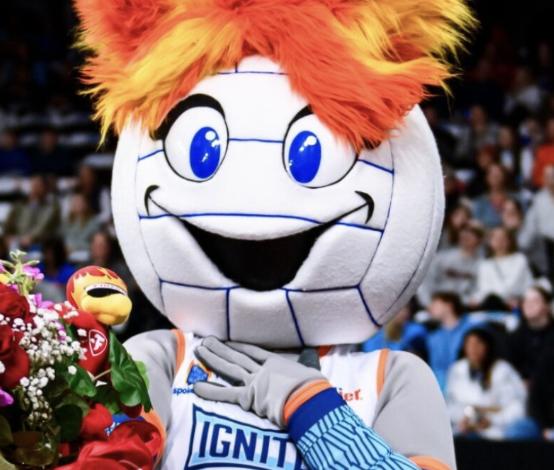
A great mascot handler does much more than follow a mascot around.
Mascot costumes create limited vision, reduced hearing, heat, mobility challenges, and plenty of opportunities for unexpected fan interactions. A good handler becomes the performer’s eyes, ears, navigator, communicator, and safety partner while helping the mascot stay in character.
If you’ve been asked to handle a mascot for the first time, here’s what you need to know.
What Is a Mascot Handler?
A mascot handler is the person who accompanies a mascot performer during games, appearances, community events, and other activities.
Depending on the organization, they may also be called a:
- Mascot escort
- Mascot assistant
- Mascot spotter
- Character attendant
- Mascot wrangler
Whatever you call the position, the job is essentially the same:
Help the mascot create great interactions while keeping the performer and everyone around them safe.
The best handlers aren’t the center of attention.
They’re the person quietly making everything work.
Why Do Mascots Need Handlers?
Try putting a giant foam animal head over your head.
Now imagine navigating stairs, children, doors, cables, athletes, photographers, tables, opposing fans, and several thousand people.
That’s mascot performing.
Depending on the costume, performers may have significantly restricted vision and hearing. They also have to stay in character while navigating everything happening around them.
The handler can worry about the real world while the performer worries about being the mascot.
1. Learn the Mascot’s Blind Spots
Before the appearance begins, learn what your performer can and cannot see.
Every costume is different.
Some performers see through the character’s eyes.
Others see through the mouth, nose, neck, or another concealed area.
Have the performer put on the costume and test their visibility.
Stand:
Directly in front of them.
Beside them.
Behind them.
Above and below their normal sightline.
You’ll quickly understand where they need the most assistance.
This is especially important around children, who can easily disappear below a performer’s field of vision.
2. Watch the Ground
Your mascot is probably looking at fans.
You should be looking at everything else.
Watch for:
- Stairs
- Curbs
- Cables
- Wet floors
- Uneven ground
- Tables
- Chairs
- Equipment
- Bags
- Doors
- Low obstacles
Don’t assume the performer sees something simply because it’s obvious to you.
If you’re approaching stairs or another hazard, communicate with the performer before they reach it.
3. Protect the Mascot From Surprise Interactions
Most fans are fantastic with mascots.
Some get a little too excited.
People may unexpectedly:
- Grab the mascot
- Pull the tail
- Touch the face
- Jump on the performer
- Try to remove costume pieces
- Approach from behind
- Hit or push the character as a joke
The mascot may not even see it coming.
Handlers should pay attention to the crowd and intervene when necessary.
You don’t need to be confrontational.
Often simply stepping between the mascot and a problematic fan or redirecting the character is enough.
4. Help With Children
Kids can produce some of the best mascot interactions.
They can also be unpredictable.
Some children will sprint toward the mascot for a hug.
Others will hide behind their parents because the eight-foot tiger walking toward them is understandably terrifying.
Help the mascot notice children approaching from below their vision.
If a child seems nervous, don’t force the interaction.
Give them space.
The mascot can wave from a distance, kneel down, play peekaboo, or let the child decide whether they want to approach.
The goal is a positive memory—not getting the photo at all costs.
5. Be the Mascot’s Voice
Mascots typically communicate without speaking.
Handlers don’t have that restriction.
You can answer logistical questions without breaking the character’s illusion.
If someone asks:
“Where does the mascot need to go next?”
You answer.
If an event organizer says:
“We need you backstage in five minutes.”
You handle it.
If a parent asks:
“Can we get a picture?”
You can coordinate it.
This allows the mascot to continue interacting without suddenly needing to explain the event schedule through an elaborate game of charades.
6. Keep Track of the Schedule
Mascots aren’t always good at keeping track of time.
Not because performers can’t read clocks.
Because mascots shouldn’t constantly be pulling out their phones.
The handler should know:
- Appearance start time
- Break schedule
- Photo times
- Game-day cues
- Special appearances
- Meeting locations
- Exit time
- Costume change times
Give your performer subtle warnings when it’s time to move.
If the mascot is supposed to be somewhere in five minutes, don’t wait until those five minutes are over to mention it.
7. Help the Mascot Escape Conversations
Mascots have a unique problem.
They can’t say:
“It was really nice meeting you, but I need to go.”
This can result in interactions that go on forever.
A good handler recognizes when the performer needs to move and creates the exit.
Something as simple as:
“We’ve got to get him over to his next appearance, but let’s grab one quick picture!”
can save the performer from having to awkwardly mime their escape.
8. Protect Breaks
Mascot performers need breaks.
And breaks should actually be breaks.
When the mascot reaches a private changing area, give the performer space to remove the costume, cool down, drink water, and recover.
Don’t invite random people backstage to meet the mascot.
Don’t let fans follow the character into the changing area.
And don’t pressure the performer to skip necessary breaks because an event is busy.
The person inside the costume needs time to recover.
9. Protect the Character’s Identity
For many mascot programs, protecting the illusion is part of the job.
That means avoiding situations where fans see the performer:
- Removing the head
- Entering the costume
- Leaving the costume
- Changing clothes
- Carrying the mascot head publicly
Help find private locations for costume changes and breaks.
If you’re moving costume pieces through a public area, use bags or another appropriate method to keep the character presentation professional.
Nobody needs to see their favorite mascot’s head riding through the hotel lobby upside down on a luggage cart.
10. Learn Your Mascot’s Signals
Experienced mascot-handler teams often develop their own silent communication system.
This can be extremely useful.
For example, you might establish signals for:
“I need water.”
“I need a break.”
“I can’t see.”
“Get me out of here.”
“Something is wrong with the costume.”
“I’m overheating.”
These signals should be simple and easy to recognize.
Most importantly, handlers should take them seriously.
11. Carry the Useful Stuff
A good handler often becomes a walking mascot emergency kit.
Depending on the appearance, consider carrying:
- Water
- Extra undershirts
- Cooling supplies
- Small towel
- Safety pins
- Tape
- Basic repair supplies
- Phone
- Schedule
- Mascot accessories
- Performer identification
- Small props
You don’t need to carry an entire workshop everywhere you go.
But having a few essentials nearby can prevent small problems from becoming big ones.
12. Help With Photos
Mascots take a lot of pictures.
Handlers can make those pictures much better.
Watch for crooked costume pieces, backwards clothing, hidden faces, awkward positioning, and anything else the performer can’t see.
You can also offer to take the picture when families are struggling to get everyone into the shot.
Before moving on, make sure the photo actually worked.
Few things are worse than discovering later that the only photo someone got with the mascot was blurry.
13. Understand When NOT to Interfere
Being helpful doesn’t mean controlling every interaction.
If the mascot is doing something funny with a fan, let them cook.
Great performers are constantly improvising.
You don’t need to explain every joke or rush every interaction.
Stay nearby.
Watch for safety problems.
Keep track of time.
Then allow the mascot to perform.
The best mascot-handler partnerships are built on trust.
Mascot Handler Do’s and Don’ts
|
DO |
DON’T |
|---|---|
|
Watch for obstacles |
Spend the appearance on your phone |
|
Monitor the crowd |
Wander away from the mascot |
|
Keep track of time |
Rush every fan interaction |
|
Protect performer breaks |
Bring fans into private areas |
|
Communicate with event staff |
Make the mascot break character |
|
Watch for children |
Assume the performer sees everything |
|
Carry essential supplies |
Overload yourself unnecessarily |
|
Learn performer signals |
Ignore requests for a break |
|
Let the mascot perform |
Try to become the entertainment |
What Makes a Great Mascot Handler?
The best mascot handlers are:
Observant.
They notice problems before the mascot does.
Calm.
Unexpected things happen constantly during live events.
Communicative.
They can coordinate with the performer, fans, staff, and event organizers.
Protective without being overbearing.
They’re willing to intervene when necessary without ruining normal interactions.
Reliable.
The performer needs to know their handler isn’t going to disappear halfway through an appearance.
And perhaps most importantly:
They understand the character isn’t about them.
Their job is to help the mascot shine.
Mascot Handler Checklist
Before the appearance:
☐ Review the schedule
☐ Learn the mascot’s visibility limitations
☐ Establish communication signals
☐ Identify the changing/break area
☐ Confirm water and cooling supplies
☐ Check costume pieces and props
☐ Know where the mascot needs to enter and exit
During the appearance:
☐ Watch the ground and surroundings
☐ Monitor children and crowds
☐ Keep track of time
☐ Communicate with event staff
☐ Protect the mascot’s identity
☐ Watch for signs the performer needs a break
After the appearance:
☐ Help return the performer to a private area
☐ Account for costume pieces and props
☐ Give the performer time to cool down
☐ Help prepare the costume for proper drying and storage
Frequently Asked Questions About Mascot Handlers
Does every mascot need a handler?
Not every appearance requires one, but handlers can be extremely valuable in crowded, unfamiliar, or complicated environments. Organizations should consider the performer’s visibility, environment, audience, costume design, and event responsibilities when deciding whether a handler is needed.
What does a mascot handler do?
A mascot handler helps the performer navigate the environment, watches for hazards, communicates with event staff, manages the schedule, assists with fans and photos, protects breaks, and helps the mascot stay in character.
Should mascot handlers talk for the mascot?
Handlers can handle logistical conversations and answer questions from event organizers or fans when necessary. The goal is to let the mascot maintain its character while the handler handles practical communication.
How do you become a good mascot handler?
Learn the costume’s limitations, stay close to the performer, pay attention to the environment, understand the schedule, establish communication signals, and learn when to help versus when to let the mascot perform.
Can mascot handlers become performers?
Absolutely. Handling can be a useful way to learn how experienced mascots interact with crowds, navigate appearances, use props, and stay in character. Some mascot programs use handler roles as an introduction to the program for future performers.
Want to Improve Your Mascot Program?
A strong mascot program isn’t just about the person inside the suit. Performers, handlers, coaches, administrators, and event staff all play a role in creating great mascot experiences.
Get My Mascot is building resources to help both new and experienced performers improve their craft.
You can also explore Mascot Coaching to connect with experienced current and former performers, browse Mascot Job Listings for your next opportunity, or use the Mascot Manufacturers & Services Directory when your program needs costume help.
Because behind every great mascot…
there’s usually a handler making sure they don’t walk directly into a folding table.
Leave a Reply