
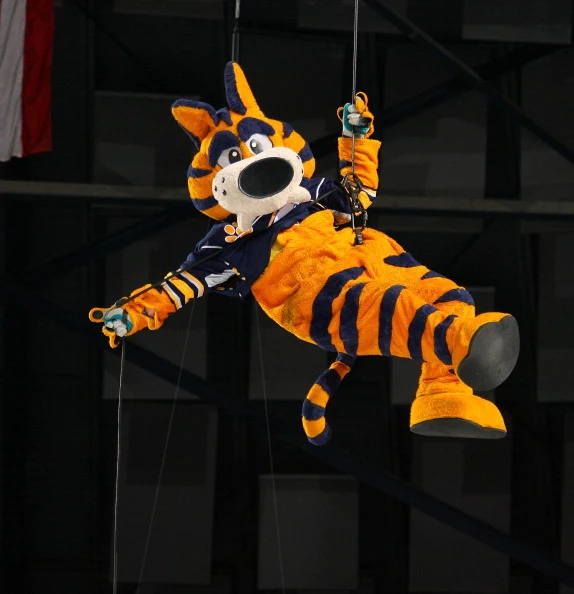
Traveling with a mascot costume isn’t exactly like packing a normal suitcase. Mascot heads are oversized, feet take up a surprising amount of space, costumes can be expensive or impossible to replace quickly, and one rough baggage handler can turn a simple flight into a mascot performer’s worst nightmare.
Whether you’re traveling for a game, competition, appearance, mascot camp, or special event, the goal is simple: get yourself and your mascot costume to the destination safely.
Here’s how to make that happen.
Should You Check or Carry On a Mascot Head?
One of the first decisions you’ll need to make is whether to check your mascot head with the rest of the costume or try to bring it into the cabin.
Unfortunately, many mascot heads are simply too large to qualify as normal carry-on luggage.
That means performers often need to pack the head inside a larger checked bag or protective container.
Before traveling, measure your mascot head and compare those measurements with your airline’s current baggage requirements.
If your character has a particularly large or unusually shaped head, figure this out before arriving at the airport.
The check-in counter is a terrible place to discover that your plan isn’t going to work.
What Is the Best Bag for Traveling With a Mascot Costume?
Mascot performers use several different solutions depending on the size and construction of their costume.
Hockey and Goalie Bags
Large hockey bags are popular because they’re designed to hold bulky sports equipment.
For some mascot costumes, a sufficiently large hockey or goalie bag can hold:
- Mascot head
- Body suit
- Hands
- Feet
- Clothing or jerseys
- Small props
- Cooling equipment
A rolling hockey or goalie bag can be especially useful when you’re navigating airports.
A mascot costume gets heavy very quickly.
Wheels are your friend.
Large Rolling Gear Bags
Another option is an oversized rolling equipment bag.
These can be particularly useful when you want separate compartments for different costume pieces.
Look for something that provides:
Size + protection + organization + strong wheels.
Don’t choose a bag solely because the costume technically fits inside it.
Remember that airport baggage isn’t always handled gently.
Hard-Sided Containers
Some performers use large plastic or hard-sided storage containers to provide additional protection.
This can be particularly useful for mascot heads that could become damaged if they’re crushed.
If you go this route, make sure the container can be securely closed and meets the transportation requirements of your airline.
Protect the Mascot Head First
Your mascot head is usually the costume piece you should worry about most.
A jersey can be replaced.
A damaged custom mascot head might take weeks or months to repair or replace.
Before putting the head into your travel bag, remove anything that could become detached or damaged.
Depending on the character, that could include:
- Hats
- Glasses
- Helmets
- Horns
- Accessories
- Removable facial pieces
Don’t force a mascot head into a space that’s too small.
Even if you manage to close the bag, constant pressure during a flight could deform foam, fur, facial features, or internal structures.
Use the Rest of the Costume as Padding
You already have plenty of soft material traveling with you.
Use it.
Place softer costume pieces around the mascot head to create additional cushioning.
The body suit, jerseys and other soft pieces can help prevent the head from shifting during transportation.
Just be careful about putting heavy objects against fragile areas.
Think of your mascot head as the center of the package and build protection around it.
Pack a Mascot Emergency Kit Separately
Don’t bury every useful item underneath your costume.
Keep a small mascot emergency kit somewhere accessible.
Consider packing:
- Safety pins
- Small sewing kit
- Athletic tape
- Gaffer tape
- Extra shoelaces or straps
- Cooling towels
- Deodorizing supplies
- Extra undershirts
- Replacement accessories
- Basic costume repair supplies
Mascot costumes have an incredible ability to break at the least convenient moment possible.
Being able to make a temporary repair can save an appearance.
Take Photos Before Checking Your Costume
Before handing your mascot bag over to the airline, take pictures.
Photograph:
- The costume pieces.
- The condition of the mascot head.
- How everything was packed.
- The outside of the bag or container.
This gives you a record of the costume’s condition before traveling.
It’s also worth keeping documentation about the costume and your organization’s contact information available while traveling.
Put Identification INSIDE the Bag
A luggage tag on the outside is great.
A second form of identification inside the bag is even better.
Include your:
Name Phone number Email address Organization/team
If an exterior luggage tag gets damaged or removed, someone opening the bag still has a way to identify its owner.
For an organizational mascot, consider including the team’s contact information as well.
Never Assume Your Costume Will Arrive With You
Lost baggage is inconvenient for anyone.
For a mascot performer, it can mean missing the entire reason you traveled.
Whenever possible, don’t schedule your arrival immediately before the appearance.
Giving yourself additional time creates a buffer if your flight is delayed or your luggage doesn’t arrive when you do.
For an important performance, arriving the day before may be significantly safer than landing a few hours before showtime.
What Should You Do When You Arrive?
Don’t leave your mascot packed until the performance.
As soon as reasonably possible, unpack everything and inspect it.
Check the:
- Head
- Vision areas
- Internal helmet or head support
- Hands
- Feet
- Straps
- Zippers
- Seams
- Accessories
Make sure nothing was crushed, ripped, disconnected, or otherwise damaged during transportation.
Then allow the costume to air out.
This becomes especially important on trips where you’re performing multiple times.
Never Pack a Wet Mascot Costume
This deserves its own section.
Do not finish an appearance, throw a sweaty mascot into a bag, zip it up, and forget about it.
Mascot performers sweat—a lot.
Trapping that moisture inside a closed travel bag can create odors and potentially damage costume materials.
Whenever possible, allow costume pieces to dry completely before repacking them.
If your travel schedule makes that impossible, unpack and begin drying everything as soon as you reach your next destination.
Create a Mascot Packing Checklist
When you’re traveling with several costume pieces, forgetting one small item can cause a surprisingly large problem.
Before every trip, use a checklist.
|
Costume |
Performance |
Travel |
|---|---|---|
|
Head |
Props |
Identification |
|
Body |
Signs |
Luggage tags |
|
Hands |
Music equipment |
Chargers |
|
Feet |
Giveaway items |
Repair kit |
|
Jersey/outfit |
Accessories |
Cooling supplies |
|
Undershirts |
Character-specific items |
Cleaning supplies |
Customize the list for your character.
Then physically check each item before leaving.
Nobody wants to travel 1,000 miles before realizing the mascot’s hands are still sitting in the equipment room.
Traveling With Multiple Mascot Costumes
If you’re responsible for several characters, organization becomes even more important.
Avoid randomly mixing pieces between bags.
Label costume pieces and keep characters together whenever possible.
You don’t want to arrive at an event with:
Mascot A’s head + Mascot B’s hands + absolutely no idea where Mascot A’s feet went.
For organizations that travel frequently, creating a standardized packing system can save enormous amounts of time.
Can You Ship a Mascot Costume Instead?
Sometimes shipping the costume directly to your destination may be an option.
However, shipping introduces its own risks.
You’ll need to consider:
- Shipping time
- Insurance
- Tracking
- Packaging
- Delivery location
- Return shipping
- Potential delays
For an irreplaceable custom mascot costume, make sure you understand what protection is actually provided before shipping it.
Flying With a Mascot Costume Checklist
Before heading to the airport:
☐ Measure your mascot head and travel bag
☐ Check your airline’s current baggage requirements
☐ Protect fragile areas of the mascot head
☐ Remove vulnerable accessories
☐ Pack softer costume pieces around the head
☐ Bring basic repair supplies
☐ Photograph the costume before checking it
☐ Put identification inside and outside the bag
☐ Confirm every costume piece is packed
☐ Give yourself extra time before the appearance
☐ Inspect and air out the costume after arrival
That ten-minute check could save your entire trip.
Frequently Asked Questions About Traveling With Mascot Costumes
What type of bag should I use for a mascot costume?
Large hockey bags, goalie bags and oversized rolling equipment bags are common options because mascot costumes require considerably more space than normal luggage. The best option depends on the dimensions and construction of your particular mascot.
Can I bring a mascot head on an airplane?
Potentially, but it depends on the mascot head’s dimensions and the airline’s current baggage policies. Many mascot heads are too large for standard carry-on requirements, which means they need to be carefully packed as checked baggage.
How do you protect a mascot head while flying?
Avoid crushing the head into an undersized bag. Remove vulnerable accessories and surround the head with soft costume pieces or other appropriate padding to limit movement and pressure during transportation.
Can you check an entire mascot costume on a flight?
Many performers travel with mascot costumes as checked baggage, but baggage requirements vary by airline. Always verify the airline’s current size, weight, and baggage policies before traveling.
Should I wash my mascot costume before traveling?
A mascot costume should be clean and completely dry before being packed for an extended period. After performing, allow sweaty costume pieces to dry as much as possible before packing them again.
Find More Resources for Mascot Performers
Mascot performing involves a lot more than putting on a costume.
From travel and costume maintenance to auditions, jobs, performance techniques, and building an entire mascot program, there is a lot to learn—and much of it comes from other performers who have already experienced it.
That’s why Get My Mascot is building resources specifically for the mascot community.
Looking for your next opportunity? Check out our Mascot Job Listings.
Need help improving your performance or building a mascot program? Explore Mascot Coaching and connect with experienced current and former performers.
And if your organization needs a new costume or repairs, check out our directory of Mascot Manufacturers & Services.
Keep creating memories—and take care of the suit that helps you create them.
Leave a Reply